

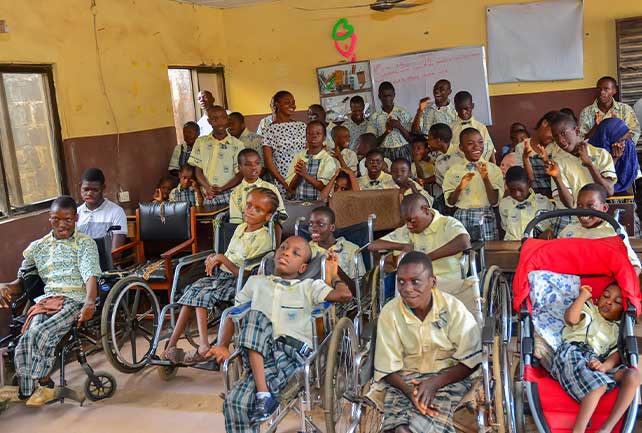
parental responsibilities on children living with disabilities
Parents are the major stakeholders in the education and management of children living with disabilities. Our understanding of disabilities is measures on attitude of parent towards them. It is worthy of note that people with disabilities do not need our sympathy but our empathy. Sympathy isolates people with disabilities socially and hinders their self fulfillment.
Parenting any child is a tremendous task talks less of a child with some differing characteristics. The parents have a vital role to play, compared to the child without disability. The following activities would go a long way in helping the special populace and parents should make it a point of duty to engage them in the activities.
1. Self-help skills and self concept They are skills that enable children to take care of themselves and they include children activities like dressing, personal hygiene and eating. The self-help skills are learnt, they usually enhance the development of a positive self-concept and feeling of independence.
2. Parents should encourage their children to engage in gross motor activities. These activities include walking, crawling. jumping, climbing. throwing and rolling.
3. The motor activities should also be encouraged. These are activities that involve the small muscles used for moving the fingers and wrist, eye-hand coordination and coordination of the two hands. Some of these activities are finger games, puzzles, pasting, cutting and panting.
4. Communication activities: The ability to use language to communicate one's thought is central to learning. Children should be engaged in activities of listening and responding to instructors hearing stories, talking, coercing and explaining. The children should not be left alone but should be encouraged to be involved in these activities.
5. Visual activities develop visual discrimination, visual memory and visual motor coordination. Some of these activities include recognizing differences and similarities in pictures and shapes and coordinating vision with body movements such 35 eye-hand coordination.
6. Auditory activities including word games, rhyming game and word memory.
7. Cognitive activities which help children to practice thinking skills such activities include. reasoning, storing and remembering information, classifying things, comparing and contrasting, problem solving and so on. Social activities promote social interaction and meaningful relationships with other children and adults. Such activities include games, sports, picnics, excursion, quiz and some other ones.
Parenting any child is a tremendous task talks less of a child with some differing characteristics. The parents have a vital role to play, compared to the child without disability. The following activities would go a long way in helping the special populace and parents should make it a point of duty to engage them in the activities.
1. Self-help skills and self concept They are skills that enable children to take care of themselves and they include children activities like dressing, personal hygiene and eating. The self-help skills are learnt, they usually enhance the development of a positive self-concept and feeling of independence.
2. Parents should encourage their children to engage in gross motor activities. These activities include walking, crawling. jumping, climbing. throwing and rolling.
3. The motor activities should also be encouraged. These are activities that involve the small muscles used for moving the fingers and wrist, eye-hand coordination and coordination of the two hands. Some of these activities are finger games, puzzles, pasting, cutting and panting.
4. Communication activities: The ability to use language to communicate one's thought is central to learning. Children should be engaged in activities of listening and responding to instructors hearing stories, talking, coercing and explaining. The children should not be left alone but should be encouraged to be involved in these activities.
5. Visual activities develop visual discrimination, visual memory and visual motor coordination. Some of these activities include recognizing differences and similarities in pictures and shapes and coordinating vision with body movements such 35 eye-hand coordination.
6. Auditory activities including word games, rhyming game and word memory.
7. Cognitive activities which help children to practice thinking skills such activities include. reasoning, storing and remembering information, classifying things, comparing and contrasting, problem solving and so on. Social activities promote social interaction and meaningful relationships with other children and adults. Such activities include games, sports, picnics, excursion, quiz and some other ones.